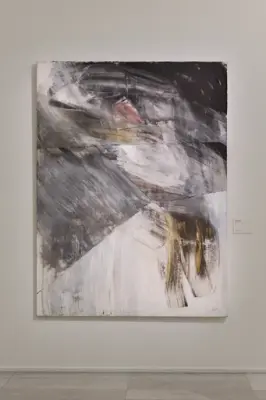
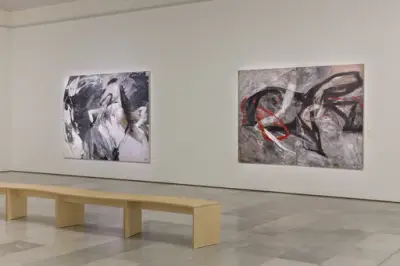
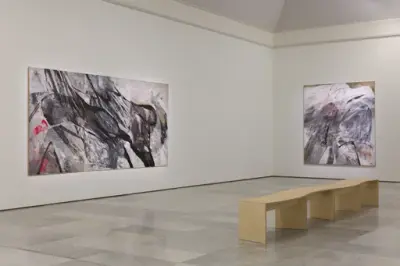
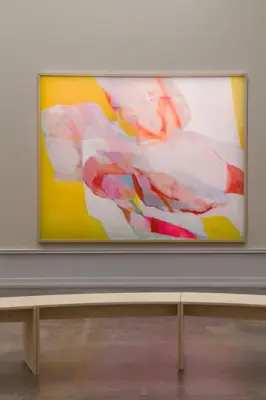
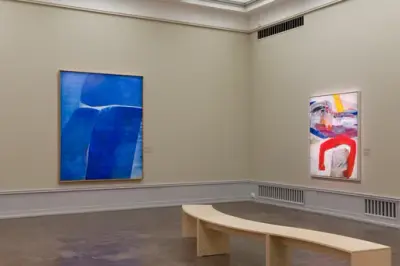
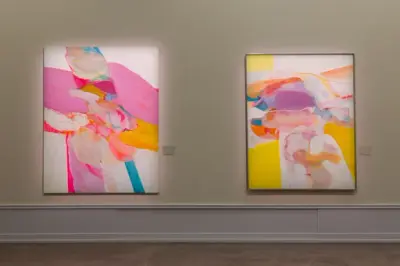
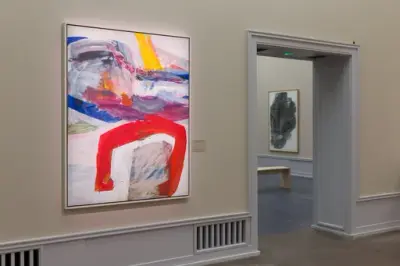
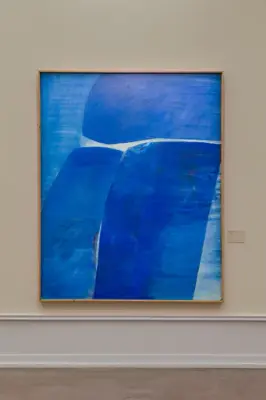
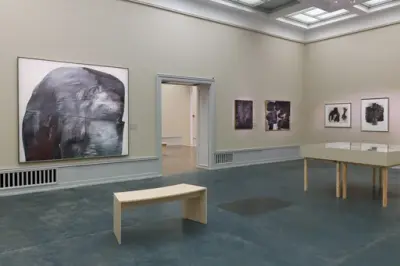
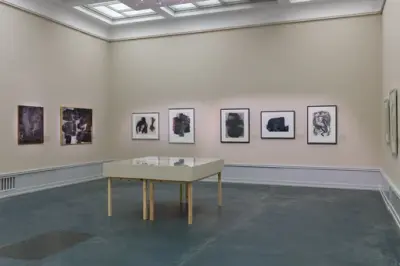
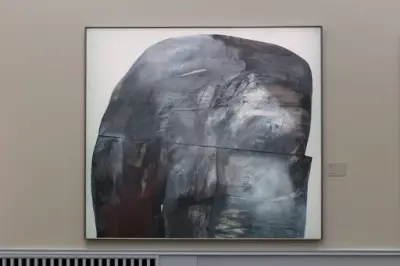
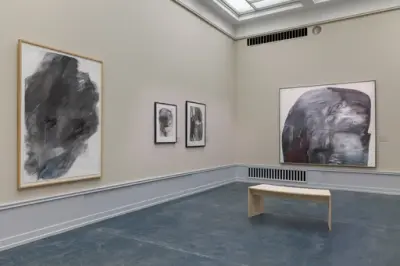
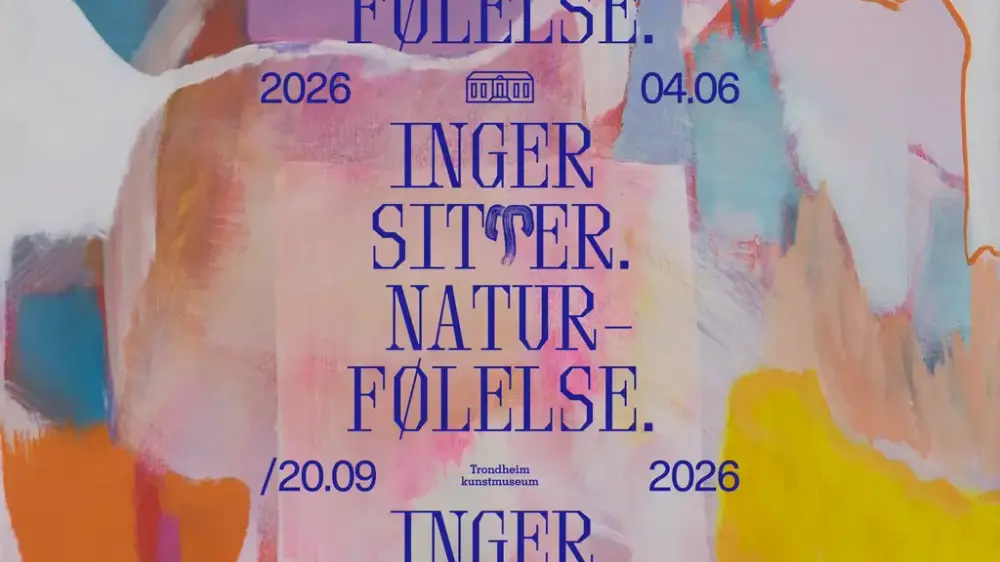
The Summer Exhibition 2026 at Trondheim Kunstmuseum features one of Norway’s leading painters working within lyrical abstraction.
Images as natural and self-evident as the weather. This was what painter Inger Sitter (1929–2015) strove for. The formations and elements of nature remained her greatest source of inspiration throughout a long and significant artistic career.
- 1/1
Introduction to Inger Sitter. Sense of Nature.
Affinity with nature is important to us, and for many, nature is closely linked to both identity and lifestyle. We experience nature through our senses; when we feel the heat from the sun, look out across stunning landscapes, or pick up the scents and sounds of the forest. It is a bodily way to experience the world that surrounds us, and when we do, our perception of time is different to in our everyday life, which is largely ruled by the clock. We are reminded that we, too, are nature. The blood circulating in our bodies, our skin sensing touch, and our thoughts. The link between humans and the vast nature is an eternal theme in art, from cave paintings to contemporary art.
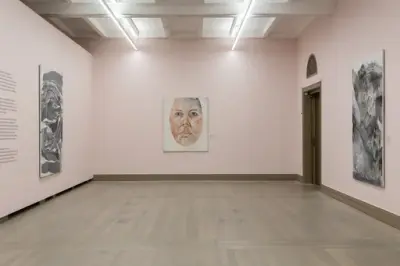
In the paintings of Inger Sitter (1929-2015), this reciprocal connection is elaborated and expanded. Striving to create images that were as given and natural as the elements, she drew from her own experiences, moods and emotions from her meetings with nature. Furthermore, her paintings allude to connections between the shapes of nature and the shapes of the human body. The curves and gaps in rocks are akin to intimate depictions of bodies, skin touching skin. And just like time leaves traces as the sea washes over the rocks, carving out crevices and furrows, she would depict her own aging face at a large scale – as a piece of nature.
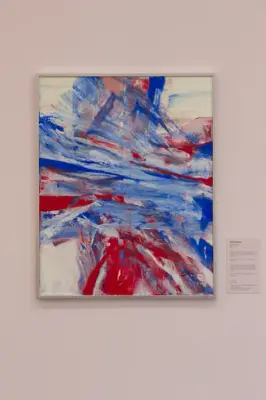
Inger Sitter’s depictions of the sense of nature contributed significantly to the breakthrough of abstract art in Norway, following massive resistance. Through lyrically abstract paintings, she transformed the moods of light and the seasons, and the constant change and movement of nature’s elements, into colours and brushstrokes. And in the process, she captured some of the essence of what is so fundamental to many of us – affinity with nature.
Inger Sitter was an important artist in the latter half of the 20th century. She was a highly influential figure, primarily through her prolific artistic practice and as a groundbreaking female artist, but also through her strong involvement in cultural politics, as she contributed directly to improving working conditions for artists in Norway.
Her passionate involvement also shone through in her paintings. Through painting nature, she commented on how we treat the planet. In forceful and vivid works, she expressed, using choppy brushstrokes, despair and anger over what we human beings can bring ourselves to do to each other and our planet. The paintings she created as a reaction to the 1990s Balkan Wars, are still as relevant today as they were then. The meaningless, destructive behaviour of human beings are also part of nature.
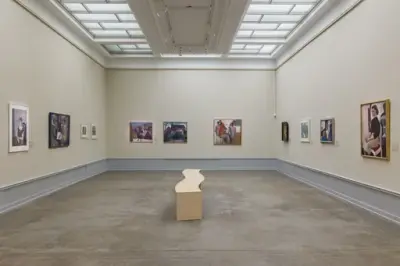
This exhibition mainly features works from Trondheim kunstmuseum’s vast collection of Inger Sitter’s art. Additionally, a number of paintings on loan complement the works from the collection and provide a wider overview of her oeuvre. The exhibition offers insight into her development, from the early figurative works towards a more liberated, abstract artistic style.
Figuration
Inger Sitter started her art education at a young age. Already in her childhood, it was obvious to everyone around her that she possessed special skills and a strong need to express herself creatively. She received private art tutoring early on, and was accepted into the Norwegian National Academy of Fine Arts in Oslo at the tender age of 15.
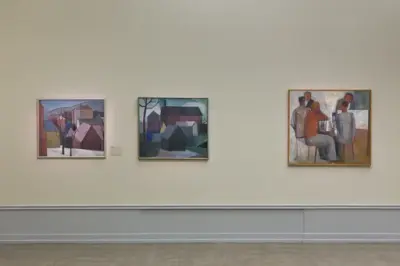
The education she received there, and later at the Royal Academy of Fine Arts Antwerp, provided her with a solid foundation in classical drawing, composition, and geometry. She also spent some time training under Cubist painter André Lhote in Paris, with emphasis on conscious structural image-making and use of colour.
Her early works bear evidence of this starting point in a figurative art tradition. However, this education became an important foundation for her further development. It would take time to break loose from the rigid figurative style, but throughout her life, she would emphasise how important her classical schooling had been for her artistic practice.
Towards an Abstract Artistic Style
In the first half of the 1950s, Inger Sitter gradually moved towards an abstract style. “It wasn’t enough simply to paint in an abstract style, I had to do it with conviction, with compulsion.”
Lyrical abstraction, a romantic Modernist trend that cropped up in Paris in the late 1940s, resonated strongly with her. This movement arose from a need to bring emotions and human value into abstract art, taking inspiration from nature. Rather than a literal representation of a landscape, an artwork should strive to express transformations of experiences, feelings and sensible perceptions. Art must represent life, but without imitating it.
For Inger Sitter, this became an entry point into an abstract style. Using the vast nature as a source, sensibility and memories from her personal experiences could be transformed into colours, brushstrokes and shapes on the canvas. The landscape in the area around Viksfjord and Tjøme held special meaning to her, and she would return to the rock formations there time and again.
Her paintings in the lyrical abstract style would be massively influential and contributed to the breakthrough of abstract art in Norway. She produced a large oeuvre in which Norwegian nature had a strong presence, and experiences in nature were translated into brushstrokes and blocks of colour.
Nature was an eternal motif in Inger Sitter’s work, including many of her prints. She would attribute her time at Stanley Hayter’s printmaking workshop in Paris, Atelier 17, to her transition into abstract art. Through the work she produced there, she “gained an understanding of non-figurative art”, as she herself put it, allowing her to let go of representational motifs. Her prints make up a significant part of her artistic practice.
Several art movements would influence her development, and not exclusively the French ones. For example, she found the free approach to painting in American Modernism in the early 1960s particularly liberating. Inspired by these different impulses, she created a number of collages in which she painted pieces of cloth and paper onto the canvas in order to create texture and enrich the surface.
Nature. Senses.
In the abstract images, shapes are formed through colour and brushstrokes, in the same manner as lines in her earlier, figurative works. Rather than representations of the external world, these are transformations of subjective experiences, perceptions, moods and emotions, in which colours and brushstrokes play a central part.
Inger Sitter’s use of colour would often correspond with her reactions to her surroundings, as well as her own frame of mind. Over the course of her artistic career, she would go through periods of using bold colours, others where she would use black, white, and grey. Whereas the bold, striking colours from the 1960s were an expression of hope and optimism for the future, her later motifs took on a darker colour palette, reflective of a more sombre view of the world.
“I remember having thoughts along the lines of, Oh, well. We may have destroyed the planet, but at least we can’t mess up these mountains – our coastal rocks. They are eternal. They will survive all of that.”
Inger Sitter was a passionate person and a politically aware artist. This is clearly reflected in her paintings as well as her many commissioned public artworks, often referencing the shapes and elements of nature. The ruthless exploitation of nature at the hand of humankind and the vulnerability of the planet were central themes in her works.
Suffering and injustice angered her, something that is evident in several of her works. As a new war broke out in Europe in the 1990s, she created a number of large-scale paintings in which she put despair into shapes. In her painting Ragnarok, the senseless destruction of war is depicted through harsh, intense brushstrokes in black and grey, interspersed with blood red.
Inger Sitter Biography
Inger Sitter (1929–2015) was born in Trondheim and was an important artist in Norwegian Modernism. Through her long and prolific artistic career, she worked with painting, printmaking and public art, often based around nature. Her lyrically abstract paintings contributed significantly to the breakthrough of abstract art in Norway. Her artistic career started very early, and she had her debut at only 13 years old, exhibiting at Trondhjems Kunstforening. At the age of 15, she was accepted at the Norwegian National Academy of Fine Arts in Oslo, and she would go on to study in Antwerp and Paris, among other places.
During her career, Inger Sitter had more than 80 exhibitions. Her works are represented in several collections in Norway and abroad, and she has created a number of important public artworks. As a female artist, she paved the way for new generations and was an outspoken figure in Norwegian public life. Her involvement in cultural politics contributed to improve working conditions for artists.
Images from the exhibition
- 1/16
Lili Zaneta/TKM | - 2/16
Lili Zaneta/TKM | - 3/16
Lili Zaneta/TKM | - 4/16
Lili Zaneta/TKM | - 5/16
Lili Zaneta/TKM | - 6/16
Lili Zaneta/TKM | - 7/16
Lili Zaneta/TKM | - 8/16
Lili Zaneta/TKM | - 9/16
Lili Zaneta/TKM | - 10/16
Lili Zaneta/TKM | - 11/16
Lili Zaneta/TKM | - 12/16
Lili Zaneta/TKM | - 13/16
Lili Zaneta/TKM | - 14/16
Lili Zaneta/TKM | - 15/16
Lili Zaneta/TKM | - 16/16
Lili Zaneta/TKM |